How to Restore Faded Car Plastic With Auto Plastic Restorer
Yellowed plastic trim can ruin your car's appearance, even when you have just washed it. Fortunately, there is something called auto plastic restorer, which can help restore the dark luster of the plastic without having to replace the trim pieces.
Plastic tends to yellow due to sun exposure and heat buildup. Soap scum build-up and dirt deposits also help dry the plastic out, leading to a faded appearance and discoloration from black to gray or chalky.
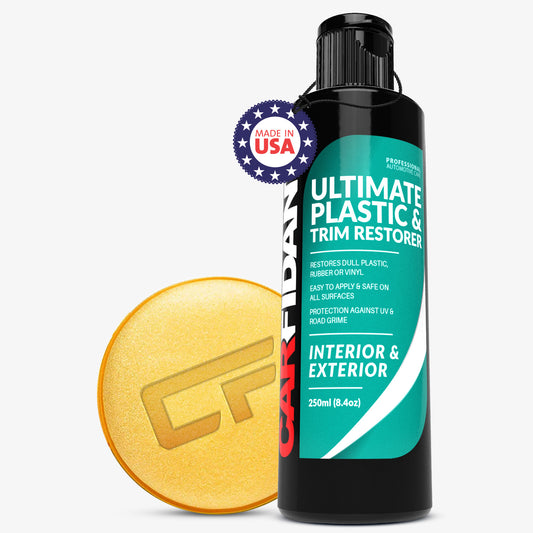
This tutorial is going to show how easy it is to do this restoration in two simple steps using Trim & Plastic Restorer. You want to get a restored finish on your trim, not a dirty one.

Why Auto Plastic Restorer Works on Faded Car Plastic
An auto plastic restorer is used for renewing plastic trim on the exterior of cars. The product restores the color of faded plastic and makes it uniformly darker, more even, and smoother.
While faded plastic trim might be dirty, in most cases washing will not be enough to bring it back to life. Most often, the plastic gets dark due to UV exposure and oxidation. Plastic starts reflecting light differently and becomes more greyish in its color.
An auto restorer helps revive the original color by penetrating into the textured surface and making it darker. Besides, it will help make your plastic less dry which will enhance the appearance when compared to the freshly painted metal.
This is crucial because trim is what frames the vehicle. In case of badly faded and dry trim, the paint quality may also suffer. The trick here is proper preparation. You should always wash and dry your plastic before applying the product. Otherwise, the surface will get streaky after application of restorer, wax, or dressing. Ideally, the result should be dark and even, without being glossy.
To get an optimal result in the process of restoring your plastic, pay extra attention to initial cleaning. It is essential to wash it thoroughly since there are always grinds trapped in the texture of the material.
What You’ll Need for Auto Plastic Restorer
- Trim & Plastic Restorer
- Microfiber towel
- Foam applicator pad
- Car wash soap
- Soft detailing brush
- Masking tape
- Nitrile gloves
- Clean water
- Dry towel
How to Use Auto Plastic Restorer Step-by-Step

Step 1 – Wash the Trim First
Wash the Trim First Start with a regular wash. Clean off any dirt, dust, or road film on the trim. Look for dirty areas that collect debris, such as textured bumpers, mirrors, windshield cowls, and rocker panels.
If the trim has a textured surface, use a soft detailing brush to help lift up old grime rather than simply brushing over the top.
Step 2 – Dry the Plastic Completely
Dry off the trim with a clean microfiber towel. Residual water in a textured plastic will interfere with proper application.
Don't forget about corners, seams, and other recesses. Water tends to stay in these areas longer than it does on smooth surfaces.
Step 3 – Tape Off Nearby Paint If Needed
Cover painted surfaces adjacent to the trim with masking tape if necessary. This ensures you get a clean and neat finish during application.
There is no need to be overly cautious here. Just cover those parts where your applicator may accidentally touch the paint.
Step 4 – Apply a Thin, Even Coat
Apply Trim & Plastic Restorer to a foam applicator pad in light amounts and work it into the trim.
Don't saturate the trim with too much product. Less goes a long way and results in a more natural look.
Tip of the day: Work in small sections. Apply the restorer and finish each separate mirror base, trim piece, or bumper area before moving on.
Step 5 – Buff Off Extra Product
Wipe excess Trim Restorer off with a dry microfiber towel after applying it. Doing this prevents streaks and uneven results.
Inspect the trim from several angles and remove any extra product or high spots you see.
Tips to Prevent Problems

Old plastic looks good after being kept clean and maintained properly. A huge mistake is to allow detergents, wax, and polish to leave dried residue on trim parts, as it causes discoloration and accelerates their fading. Wash the trim in regular car washing sessions; don't use harsh degreaser on the trim unless necessary, as the substance may dry plastic if applied too frequently.
Be careful about applying wax and polish over textured black trim since white residue is harder to get rid of later. Covering the trim while polishing and painting nearby elements or treating it by hand is a wise decision here.
Another useful tip is to park your vehicle in shady places. UV rays cause most of the damage to trim parts, fading them quickly. While avoiding sunlight totally is impossible, limiting its contact with plastic trim will help to delay the process.
Keep a close watch on high-use and weather-exposed areas after using auto plastic restorer. They include mirror bases, windshield cowls, and bumper trim; their fading starts much faster than other elements'.
FAQ About Auto Plastic Restorer
Can auto plastic restorer fix all faded trim?
It can restore the appearance of most faded exterior plastic trim, particularly black textured trim that may be grayish or dry looking. It cannot repair damage such as cracks, peeling paint or other damage.
How long does auto plastic restorer last?
It depends upon the weather conditions, washing habits, sun exposure, and condition of the trim. Cars that are left outdoors need more frequent maintenance and application of the product. Gently wash your car to prolong its effect.
Should I clean the trim before applying restorer?
Definitely. It is one of the critical steps. Residue from dirt, wax, previous dressing, or soap needs to be removed before applying any product. Otherwise, it would prevent the restorer from spreading evenly.
Can I use auto plastic restorer on interior plastic?
Use it only according to manufacturer instructions if it applies. Interior and exterior plastic may differ in terms of texture and finish. Clean the interiors with specific products designed for dashboard and other interior plastics.
Why does my trim look streaky after applying restorer?
Streaks appear because of applying too much product at once, not cleaning the trim first, or failing to remove excessive product. Always apply the product thinly, distribute evenly across the surface, and wipe off excess.
Conclusion
The appearance of your vehicle may be diminished by worn trim pieces, but they can usually be fixed easily enough. Start by cleaning the plastic thoroughly, then apply some plastic restorer to the part, and polish it to perfection.
Trim & Plastic Restorer can restore the color and shine of your vehicle's exterior plastic pieces without requiring replacement parts.

| # | Anchor | URL | Type |
| 1 | Trim & Plastic Restorer | https://carfidant.com/products/carfidant-trim-plastic-restorer | Product |
| 2 | plastic-trim-restorer-faded-trim-fix | https://carfidant.com › blogs › car-care-tips › plastic-trim-restorer-faded-trim-fix | Internal |
| 3 | best-plastic-restorer-for-cars-top-picks-2026 | https://carfidant.com › blogs › car-care-tips › best-plastic-restorer-for-cars-top-picks-2026 | Internal |
| 4 | ceramic-coating-spray-what-it-is-how-to-apply | https://carfidant.com › blogs › car-care-tips › ceramic-coating-spray-what-it-is-how-to-apply | Internal |
| 5 | best-interior-car-cleaner-guide | https://carfidant.com › blogs › car-care-tips › best-interior-car-cleaner-guide | Internal |